


A skin problem deserves professional review when it lasts beyond a reasonable recovery period, keeps returning, spreads, causes significant symptoms, or fails a correctly used treatment. By the end, you will know which patterns can wait for a routine appointment, which need same-day care, what to record beforehand, and what a specialist may investigate.
Key takeaways
- Book an appointment when symptoms last two to four weeks or keep returning.
- Seek review sooner for rapid change, severe pain, bleeding, infection signs or widespread symptoms.
- Bring product names, treatment dates, photographs and a timeline of symptom changes.
- Pause new products or procedures if they trigger burning, swelling, rash or worsening pigmentation.
Use duration, change and severity to decide when to book
Book a routine dermatology appointment when a persistent rash, itch, scaling area or unexplained pigmentation change lasts two to four weeks, keeps returning, or fails a correctly used over-the-counter treatment.
Ask when to see a dermatologist sooner if acne is deep and painful, worsening quickly, appearing on your chest or back, or leaving early pitted or raised scars.
Use these warning thresholds:
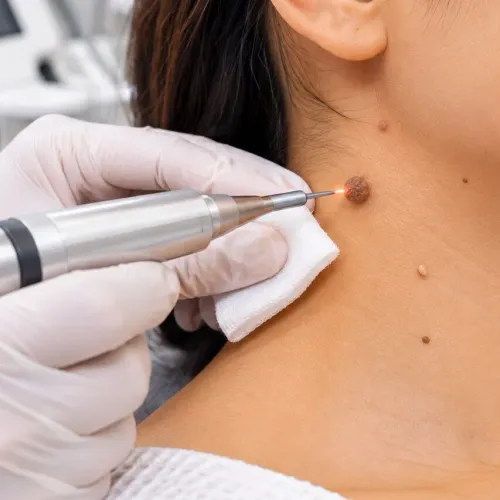
- Arrange prompt assessment for a changing mole or non-healing sore, especially if it itches, bleeds or crusts. Check the ABCDE signs: asymmetry, an irregular border, uneven colour, diameter over about 6 mm, and evolution in size, shape or symptoms.
- Seek same-day medical care when redness spreads quickly or comes with increasing warmth, pain, swelling, pus, fever or red streaking. These signs can indicate a bacterial skin infection.
- Seek emergency care for facial or eye-area swelling, breathing difficulty, widespread blistering or peeling, or severe pain. Do not wait for a routine dermatology appointment.
A lesion that looks minor can still need examination if it changes or does not heal. Do not rely only on photographs to monitor it. A dermatologist can examine the skin directly and decide whether you need treatment, testing or urgent referral.
Stop guessing when different conditions look alike
Persistence tells you a problem needs identification, not that it is eczema. Folliculitis versus acne, eczema or fungal infection, and several other conditions can look similar while requiring opposite treatments.
| Condition | How it can differ | What goes wrong with guessing |
|---|---|---|
| Acne and folliculitis | Acne has comedones; folliculitis centres on hairs and may itch | Antibiotics or acne products can miss yeast or bacterial folliculitis |
| Eczema, psoriasis, allergic contact dermatitis, fungal infection, scabies or drug eruption | Scale, distribution, itch, burrows, exposure or new medicine provide clues | Steroids can worsen infection; repeated antifungals or cleansers can irritate eczema |
| Contact dermatitis and bacterial infection | Contact dermatitis follows exposure; infection brings warmth, pain, swelling, pus or spreading redness | Delayed infection treatment can allow rapid progression |
| Melasma and post-inflammatory hyperpigmentation | Melasma is patterned, often symmetrical pigmentation; post-inflammatory marks follow prior inflammation or injury | Home peels can deepen pigment and obscure the original diagnosis |
Rotating cleansers, steroid creams, antibiotics, antifungals and home peels can create irritation, resistance, altered appearances or delayed diagnosis. A potent steroid cream on face skin or around the eyes can cause thinning, visible small blood vessels, acne-like eruptions and steroid-worsened rosacea.
Steroid use can produce tinea incognito: fungal infection spreads while losing its ring shape and scale.
Give a consistent acne regimen 12 weeks before judging it, unless severe reactions occur. Retinoids and benzoyl peroxide commonly irritate during the first weeks. Isotretinoin requires qualified supervision and pregnancy-prevention measures; it is not a stronger over-the-counter product.
Bring a clear history and know what the first visit involves
A useful dermatology consultation checklist starts with the timeline: write down when it began, what changed, and what happened before it. Bring photographs taken in consistent lighting that show progression.
- Note the onset date, possible trigger, itch or pain, and rate of spread.
- Record the recurrence pattern, pregnancy status, medicines, supplements, and allergies.
- List medical conditions, previous products, product strengths, and frequency of use.
The first visit usually includes a visual examination, lesion mapping, and a review of products and medicines. The clinician may use dermoscopy when a mole, pigment change, or other lesion needs magnified assessment.
An uncertain diagnosis may require a skin scraping, swab, bacterial or fungal culture, patch testing, or biopsy. Persistent itch without an obvious rash, itch over most of the body, or sleep-disrupting itch can prompt a medication review and selected blood tests instead of endless cream changes.
Hives need a different assessment from a fixed rash: individual wheals usually disappear within 24 hours, even when new ones appear, while recurring episodes lasting more than six weeks fit chronic urticaria. Extensive allergy testing is not automatically useful unless the history identifies a specific trigger.
Know when a new product or procedure needs a pause
Pause routine changes when a new product causes only mild dryness, stinging or peeling. Topical retinoids and benzoyl peroxide commonly irritate during the first weeks, so a regimen review is more useful than switching products every few days. Ask a clinician how to adjust frequency or amount before adding another active.
- For a mild skincare reaction, contact the prescriber or clinician and review the regimen. If you are unsure when to stop a skincare product, do not guess.
- Stop the suspected new product and seek immediate reaction care for facial swelling, blistering, breathing symptoms, widespread peeling or rapidly worsening pain. These signs need urgent assessment, not waiting for irritation to settle.
- Do not stop a prescribed medicine without clinician guidance unless urgent reaction care makes immediate action necessary. Contact the prescriber promptly and take the medicine packaging with you.
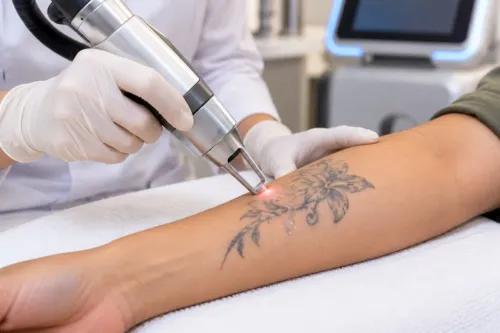
- Before a laser, peel, injectable or other cosmetic procedure, have an unresolved rash, active infection, unexplained pigment change or suspicious lesion diagnosed. Procedures can aggravate inflammation or obscure a suspicious lesion.
- Ask about cosmetic procedure safety and individualized settings, especially for darker skin tones. Burns and inflammation can cause post-inflammatory hyperpigmentation or hypopigmentation, so generic laser or peel protocols carry avoidable pigment risk.
Seek specialist review for high-risk patterns, not only failed home care
Sudden or patchy hair loss deserves prompt review, especially with eyebrow or eyelash loss, scalp pain, burning, marked scale or pustules.
Shiny scalp areas where follicle openings have disappeared can signal scarring alopecia; delayed treatment of inflammatory or scarring alopecia can cause permanent hair loss, so ask for a hair loss specialist rather than trying another oil or shampoo.
| Pattern | Why specialist review matters | What can go wrong if delayed |
|---|---|---|
| Sudden or patchy hair loss | May reflect inflammatory or scarring alopecia | Permanent hair loss |
| Persistent facial redness after steroid use | Potent facial steroids can thin skin, reveal small vessels, trigger acne-like eruptions and worsen rosacea | Repeated use can obscure the original diagnosis |
| Recurrent unexplained lesions | A fixed or recurring lesion needs its cause identified | Cosmetic treatment can mask an infection or suspicious lesion |
| Deep, painful or scarring acne | Nodules, cysts and early pitted or raised scars need treatment before scars mature | Permanent textural scars |
Persistent facial redness after repeated steroid use needs diagnosis, not another steroid trial. Arrange review for scalp burning, marked scale, pustules, eyebrow or eyelash loss, or acne that threatens permanent scarring even when home care has not been exhausted.
Choose a doctor-led assessment when the problem is persistent, recurrent, diagnostically unclear, or affecting sleep, confidence or daily life. Dr Skin N You is a Mumbai option where a consultation can assess the underlying condition before recommending skin, hair or aesthetic treatment, rather than treating an unexplained problem cosmetically.
Related service
Acne & Acne Scar Treatment 🧴 About the Clinic Dr. Skin & You is a well-rated skin care clinic in Versova known for treating a range of skin concerns including acne and... View service → |
Frequently asked questions
How long should a skin problem last before you see a dermatologist?
Book a routine appointment when a rash, itch, scaling area or unexplained pigmentation change lasts two to four weeks, keeps returning, or fails a correctly used over-the-counter treatment.
Why should you see a skin specialist when different conditions look alike?
Eczema, fungal infections, contact dermatitis, psoriasis and other conditions can share redness, itching or scaling. A dermatologist can assess the pattern and choose treatment instead of relying on guesswork.
What should you bring to your first dermatology appointment?
Bring a symptom timeline, photographs showing changes, product names, treatment details, relevant medical history and information about allergies or earlier skin conditions.
When should you pause a new skincare product or cosmetic procedure?
Pause it when you develop burning, swelling, blistering, a spreading rash, marked irritation or worsening pigmentation, then seek medical advice if symptoms persist or are severe.