

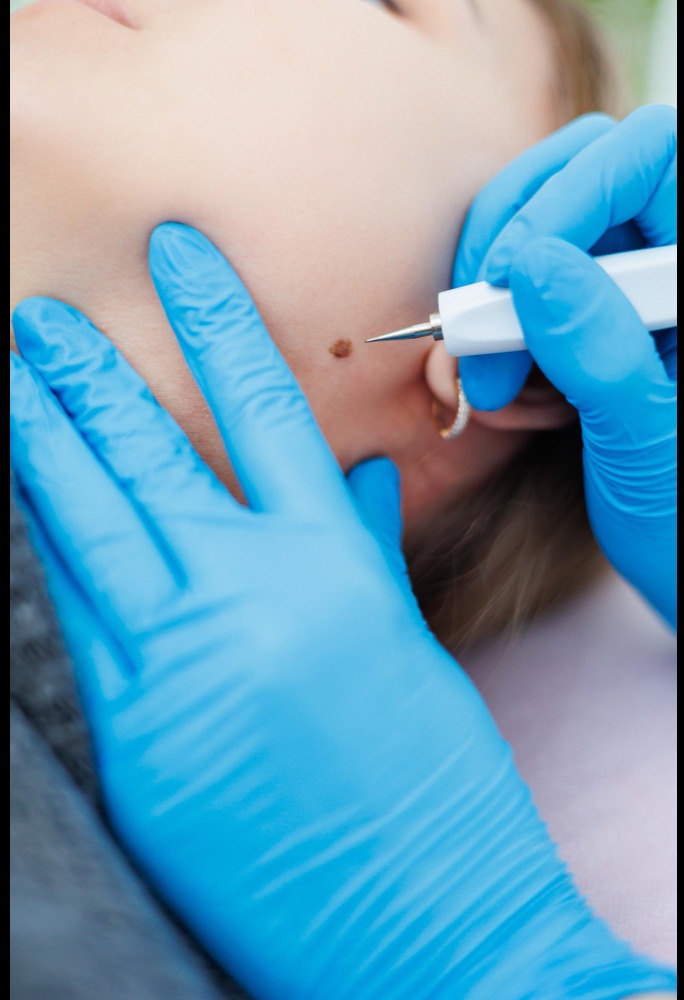
Skin tags, warts and moles are often grouped together because they appear as visible growths on the skin. In reality, they develop for different reasons and should not be treated with the same removal method. Trying to cut, burn or dissolve a growth at home can lead to bleeding, infection, burns and permanent marks.
At Dr Skin N You, Dr. Atisha Patel examines the growth before considering removal. The first priority is to understand what the lesion is, whether it appears suitable for a clinic-based procedure and whether further evaluation is necessary.
How Are Skin Tags, Warts and Moles Different?
Skin tags are usually soft, small growths that may develop in areas where skin rubs against skin or clothing. They are commonly noticed around the neck, underarms, eyelids or body folds.
Warts are caused by certain strains of the human papillomavirus. They may have a rough surface and can spread to nearby skin or other people through direct or indirect contact.
Moles develop from pigment-producing cells. Many remain unchanged for years, but a mole that changes in appearance should be assessed rather than removed purely for cosmetic reasons.
Warning Signs That Need Assessment
A professional evaluation is particularly important when a mole or growth:
- Changes in size, shape or colour
- Develops irregular or poorly defined borders
- Starts bleeding without an obvious injury
- Becomes painful, itchy or inflamed
- Grows rapidly
- Looks noticeably different from other moles
- Returns after an earlier removal attempt
Removal should not be used as a substitute for proper examination. If a growth appears unusual, the doctor may recommend additional investigation or tissue testing.
Common Removal Options
The technique selected depends on the type, size, depth and location of the growth. Possible methods may include electrocautery, radiofrequency, cryotherapy, laser treatment or minor surgical removal.
Each method has different advantages:
- Electrocautery or radiofrequency: Often used for selected raised growths
- Cryotherapy: Uses controlled freezing and may be considered for certain warts
- Laser treatment: May be suitable for selected lesions after evaluation
- Minor surgical removal: Allows complete removal of some deeper or larger growths
The method should be chosen according to the lesion rather than personal preference alone.
Removal Procedures in Andheri West and Expected Recovery
After removal, mild redness, tenderness, crusting or temporary colour changes may occur. Healing time depends on the depth of the procedure and the area treated.
For people living in Mumbai, Maharashtra, protecting the healing area from sun exposure is especially important. Picking at crusts can delay recovery and increase the possibility of scarring or pigmentation.
Patients may be advised to keep the area clean, use a recommended ointment and avoid friction from clothing or jewellery. Any increasing pain, swelling, discharge or prolonged bleeding should be reported.
Why Home Removal Is Risky
Online products may contain acids or other substances that can damage healthy surrounding skin. Tying a thread around a growth or cutting it with household tools can cause uncontrolled bleeding and infection.
Home treatment may also delay the evaluation of a lesion that should have been examined. Even when a growth is harmless, improper removal can leave a more noticeable mark than the original concern.
A doctor-led assessment at Dr Skin N You can help patients understand what type of growth they have and whether removal is appropriate. The objective is not simply to remove what is visible, but to select a method that considers safety, healing and the possibility of recurrence.