

Dark lips can result from irritation, inflammation, tobacco use, medication, genetics or a pigmented lesion, so the correct first step is diagnosis rather than bleaching. You should leave a consultation knowing what is causing the colour change, whether lightening is appropriate, what recovery involves and how filler risks will be managed.
Key takeaways
- Get the cause diagnosed before treating dark lips.
- Ask whether pigmentation, irritation, or natural colour explains the change.
- Follow strict sun and irritant avoidance during recovery.
- Confirm injector credentials, product details, emergency planning, and follow-up care.
Is the darkening pigmentation, irritation or your natural lip colour?
A clinician should identify the cause before treating lip hyperpigmentation, because bleaching normal genetic lip colour or irritated skin can create more darkening.
Examination looks at whether colour is uniform or patchy, whether the surface is dry, scaly, swollen, cracked, crusted, ulcerated or thickened, and whether the change affects the lip border, outer lip or inner mucosa.
1. Review timing and triggers: lip licking, dehydration, sun exposure, smoking or tobacco use, new lipstick or balm, toothpaste, allergies, recurrent cold sores, recent procedures, and previous filler treatments. Smoking-related melanosis usually follows tobacco exposure; post-inflammatory pigmentation follows inflammation, peeling, allergy or injury.
2. Check medicines and health context, including pregnancy, hormonal treatment and drugs known to alter pigmentation. A clinician should consider contact cheilitis, eczema, lichen planus and systemic disease when the pattern or symptoms do not fit simple irritation or inherited colour.
3. Examine suspicious areas with magnification or dermoscopy. A changing, asymmetrical, bleeding, crusted, ulcerated or firm spot needs medical assessment and sometimes biopsy before cosmetic treatment.
The safest first step is often removing an irritant and treating active cheilitis, not applying a lightening cream. Hydroquinone, retinoids, acids and steroid mixtures can inflame lip skin and cause further post-inflammatory pigmentation when misused, especially on darker skin tones. A clinician should also distinguish pigment from normal colour before considering a peel or laser.
Which lip-lightening treatment fits the diagnosis?
The diagnosis determines which lip lightening options are safe. Observation may be best for stable, symmetrical natural colour or mild pigmentation that is fading after irritation; persistent, changing, bleeding, crusted or ulcerated areas need medical assessment before cosmetic treatment.
| Option | What it does | When it fits |
|---|---|---|
| Observation | Avoids adding irritation while colour settles | Stable colour or recent post-inflammatory pigmentation |
| Trigger removal | Stops the cause and treats inflammation | Allergic contact cheilitis, lip licking, smoking, or reactions to balms, flavourings, sunscreen or toothpaste |
| Topical medication | Reduces pigment or inflammation under supervision | Confirmed surface hyperpigmentation; the vermilion is different from inner-lip mucosa |
| Chemical peel for lips | Uses a controlled acid application to exfoliate pigment-containing surface cells | Selected superficial cases, never as a home treatment or automatic choice |
| Laser | Targets pigment with light energy | Carefully selected lesions after diagnosis, with test-spot and skin-type risk assessment |
Removing the trigger often matters more than bleaching. Continuing lip licking or an irritating product while applying hydroquinone, retinoids, acids or steroid mixtures can deepen post-inflammatory pigmentation, cause cracking and create uneven colour.
Peels and lasers can make colour worse through burns, prolonged inflammation, scarring, or hypo- and hyperpigmentation. Darker skin tones carry greater risk of unwanted pigment change after energy-based treatment, and laser is unsuitable for a lesion that might require dermoscopy or biopsy.
Ask what diagnosis supports the procedure, what site is being treated, and what happens if the colour worsens.
How should you prepare, and what recovery is normal?
Stop applying acids, retinoids, hydroquinone, steroid-containing lightening mixtures and fragranced lip products unless the treating clinician tells you to continue. Do not smoke, pick peeling skin or expose your lips to tanning or strong sun before treatment.
Tell the clinician about recurrent cold sores, pregnancy, medicines, allergies and recent filler or lip procedures; needle or laser trauma can reactivate herpes simplex.
Prepare by:
- Using sun protection for lips, such as broad-spectrum lip sunscreen, and reapplying it outdoors.
- Avoiding a procedure over cracked, infected, ulcerated or actively inflamed skin.
- Asking exactly when to restart prescribed products rather than assuming a stronger routine will improve pigment faster.
| Treatment | Normal early recovery | When to assess colour |
|---|---|---|
| Observation or topical treatment | Mild dryness or irritation; avoid adding new products | Review after several weeks |
| Chemical peel | Burning, tightness, peeling and temporary redness; lip peel recovery often takes 5–14 days | Assess after healing, usually 4–8 weeks |
| Laser | Redness, swelling, crusting or temporary darkening; lip laser recovery varies by device and can take 3–14 days | Judge pigment only after 4–8 weeks |
Swelling and tenderness should gradually improve. Seek medical review for worsening pain, spreading redness, pus, fever, persistent bleeding, marked swelling, burns, scarring, or a pale or dark patch that continues to expand. Treat a cold sore after lip treatment promptly: grouped blisters, erosions or severe burning need review because antiviral treatment works best early.
What does lip augmentation add, and what risks should you accept?
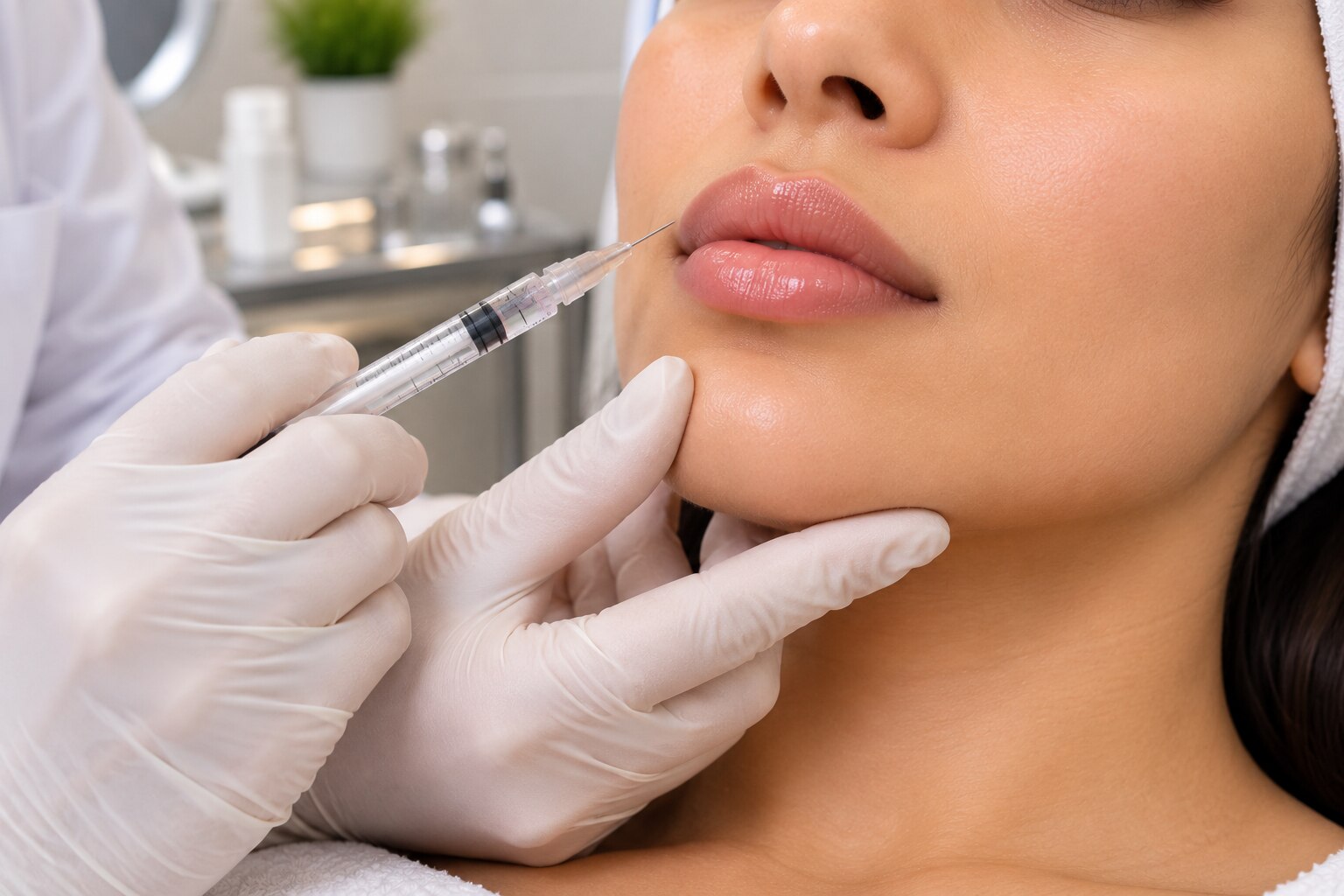
Define lip augmentation by the result you want, not by a vague request for “more volume.” Ask whether the goal is sharper border definition, greater projection, correction of asymmetry, or overall fullness. Filler changes shape and volume; it does not treat the cause of dark lip colour.
Overfilling can create an unnatural shape, migration, or palpable lumps.
Hyaluronic acid lip filler is temporary. Results commonly last about 4–12 months, depending on the product, placement, metabolism and constant lip movement. Repeat injections are part of the decision, so calculate the cumulative cost, appointments and exposure to risk rather than judging only the first treatment.
Swelling, tenderness, bruising, redness and firmness are expected early effects and should gradually settle. Infection, inflammatory nodules, granulomatous reactions, asymmetry and delayed swelling are less common. Postpone injection if you have an active cold sore, skin infection or inflammation near the treatment area.
The most serious lip filler complications involve a blood vessel. Vascular occlusion can cause severe pain, blanching, mottled colour, tissue death, visual loss or stroke.
Before consenting, confirm that a licensed, trained medical professional will inject an approved product and that the clinic has an urgent complication protocol and hyaluronidase, the reversal medicine used for hyaluronic-acid filler. Needle-free devices and unapproved injectables add avoidable risk.
What should you verify before choosing a clinic?
Verify the injector, product, diagnosis and rescue plan before you consent. The person injecting filler must be a licensed filler injector trained in facial anatomy, not someone using a needle-free device or an unapproved injectable product.
| Check | Verify | Red flag |
|---|---|---|
| Injector | Full name, medical registration and relevant injection training | Staff refuse to identify the treating clinician |
| Filler | Brand, ingredients, expiry date, sealed syringe and filler product lot number | Unlabelled product, opened packaging or no traceable lot |
| Lightening plan | Examination-based diagnosis and the exact product, peel or laser proposed | A promise to “bleach” lips without discussing irritation |
| Emergency plan | Written aftercare, an urgent contact number and a plan for vascular occlusion or infection | No same-day advice or access to appropriate treatment, such as hyaluronidase for a hyaluronic-acid filler |
During the lip treatment consultation, ask whether the clinician has assessed:
- Smoking or tobacco use, lip licking, cosmetics, allergies, dermatitis and previous procedures
- Recurrent cold sores, current medicines, pregnancy or breastfeeding, and previous filler
- Whether darkening could be contact irritation, post-inflammatory pigmentation or an underlying condition
- Which symptoms require urgent review, including severe pain, blanching or dusky skin, spreading swelling, grouped blisters or vision changes
At Dr Skin N You, use these questions to compare the proposed plan with another clinic’s answer, not just its before-and-after photographs.
Related services
Lip lightening and Augmentation Lip lightening and Augmentation Lip Lightening and Augmentation is a specialized aesthetic treatment offered by Dr. View service → |
Fillers Fillers Dermal Fillers are advanced, non-surgical aesthetic treatments offered by Dr. |
Frequently asked questions
How can you tell whether dark lips are pigmentation, irritation, or natural colour?
A clinician should assess when the colour appeared, whether it changed recently, exposure to lip products or tobacco, symptoms such as burning or scaling, and the pattern of colour before recommending treatment.
Which lip-lightening treatment fits the diagnosis?
Treatment depends on the cause. Removing irritants may help contact dermatitis, while a clinician may consider prescription products, peels, laser treatment, or no treatment for stable natural lip colour.
How should you prepare for lip-lightening treatment, and what recovery is normal?
Tell the clinician about cold sores, medicines, allergies, and previous reactions. Follow instructions on stopping irritating products, protecting the lips from sun, and managing temporary redness, swelling, peeling, or sensitivity.
What does lip augmentation add, and what risks should you accept?
Augmentation adds volume or changes the lip shape but does not treat the cause of darkening. Discuss swelling, bruising, asymmetry, lumps, infection, cold-sore reactivation, vascular occlusion, and the need for urgent treatment.
What should you verify before choosing a lip-lightening or augmentation clinic?
Verify the treating clinician’s qualifications, diagnosis process, treatment device or product, batch details for injectable filler, consent form, emergency plan, aftercare instructions, and follow-up arrangements.