

Dark circles can come from pigment, visible vessels, facial anatomy, swelling, loose skin or several causes at once. By separating those causes before choosing a product or procedure, you can avoid using a pigment treatment for a shadow—or filler for brown discoloration—and know when an eye-area change needs medical assessment.
Key takeaways
- Use daylight, overhead light and gentle stretching to identify colour versus shadow.
- Persistent, one-sided or suddenly worsening darkness needs medical assessment.
- Pigment, visible vessels, hollowness and puffiness require different treatments.
- Choose procedures based on your skin tone, cause, downtime and risk profile.
How to tell what is causing the darkness
A simple mirror test can separate colour from contour: compare the area in daylight, under overhead light and with the skin gently stretched. If the darkness stays the same in every position, pigment or visible vessels is more likely; if it changes sharply with lighting or stretching, a shadow from facial structure is contributing.
1. Brown pigmentation appears tan to brown and remains visible when you stretch the lower-eyelid skin. Grey-brown pigmentation may reflect deeper or post-inflammatory pigment, especially after rubbing, eczema or allergies.
Blue or purple vascular darkness often looks more obvious through thin skin, improves when the skin is gently pressed or stretched, and may show a red-blue tone rather than a flat brown colour.
2. Tear-trough shadowing and hollowness create a dark groove from the inner corner toward the cheek. Change your head position or use even front lighting: the “dark circle” may lessen without any change in skin colour. A consultation should assess the groove, cheek support, eyelid bags and facial movement together.
3. Puffiness appears as a raised bag, fluctuates with sleep, salt, allergies or fluid retention, and casts a shadow below it. Loose skin forms fine lines or folds that become clearer when you smile or look upward.
Mixed causes are common, so a clinician should examine both sides, ask about itching and rubbing, and assess the skin at rest and during expression.
When dark circles need medical assessment
Persistent one-sided swelling, sudden onset, or a change that does not settle deserves medical assessment rather than cosmetic treatment. Itching, redness and pain can indicate eyelid dermatitis, infection or another eyelid disorder; allergy and eczema can also cause rubbing and later pigmentation.
Swelling elsewhere, fatigue, weight change or heat and cold intolerance may point to a general health problem, including thyroid-related disease.
Seek urgent care for vision changes or severe allergy symptoms such as breathing difficulty, throat or tongue swelling, faintness, or rapidly spreading facial swelling. After filler, sudden pain, skin blanching, mottling or any visual symptom is an emergency because vascular blockage can damage skin or threaten sight.
- Ask when the darkness or swelling began, whether it affects one or both eyes, and whether it fluctuates with seasons, products, rubbing, sleep or meals.
- Tell the clinician about eczema, allergies, sinus symptoms, thyroid disease, medicines, recent infection and any injections or procedures.
- Expect examination of the eyelid skin, lashes, conjunctiva, tear drainage area and facial symmetry, along with checks for tenderness, warmth, scaling, bags and fluid retention.
- A clinician should check vision when symptoms involve sight and arrange blood tests or specialist review only when the history and examination justify them.
| Finding | Concern | Assessment focus |
|---|---|---|
| Persistent one-sided swelling | Local eyelid disorder, infection or mass | Skin, tenderness, warmth, eye movement and vision |
| Itching with scaling | Allergy or eczema | Irritants, cosmetics, rubbing and dermatitis pattern |
| Swelling with body symptoms | Thyroid or systemic cause | Medical history, examination and targeted tests |
| Pain or visual change | Urgent eye or vascular problem | Same-day eye assessment, especially after filler |
Which treatment fits each underlying cause
Match the treatment to the feature producing the darkness: creams change pigment, allergy treatment stops inflammation, and procedures alter vessels, hollows or loose skin. No single option corrects every cause.
| Option | What it can change | Best fit and limits |
|---|---|---|
| Sunscreen and sunglasses | Reduce ultraviolet-triggered melanin and protect results | Daily prevention; they do not remove an established shadow or hollow |
| Topical retinoids and hydroquinone | Gradually reduce selected epidermal brown pigmentation | Use only under medical guidance near the eyes; irritation can worsen colour |
| Azelaic acid and vitamin C | Support gradual pigment improvement with less intensive treatment | Useful for selected brown or grey-brown pigment, not blue vessels or hollows |
| Chemical peels and pigment-targeting lasers | Treat selected surface pigment | Require conservative settings and careful selection; they cannot correct structural shadows |
| Allergy or eczema treatment | Reduce itching, rubbing, inflammation and post-inflammatory pigment | Treat active disease before cosmetic procedures |
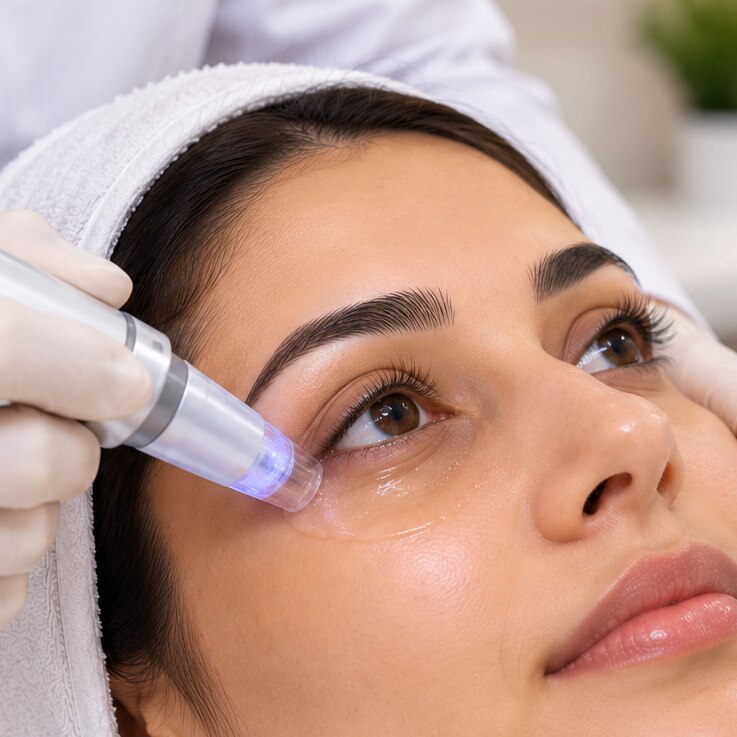
| Vascular lasers | Reduce some visible blue or purple vessels | They do not remove pigment, bags or tear-trough depression |
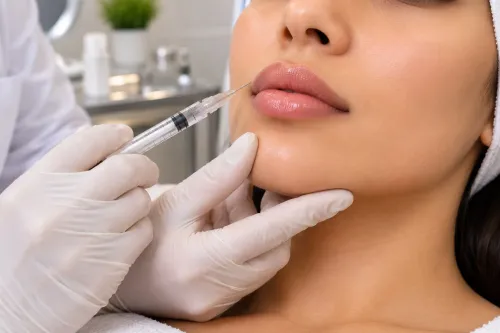
| Fillers | Add volume beneath a depressed tear trough | Suitable for structural hollowness; they cannot treat pigment and can worsen puffiness if poorly chosen |
| Tightening procedures | Improve mild loose skin and laxity | They do not replace lost volume or erase brown circles |
Pigment-directed products need consistent use over weeks to months, not days. Keep every product off the ocular surface, and stop if burning, swelling or persistent redness develops. Structural shadows need a different plan from melanin.
Why skin tone and procedure risks matter
Indian and deeper skin tones do not rule out peels or lasers, but they raise the cost of an overly aggressive setting. More melanin absorbs treatment energy and responds to inflammation, so choose a clinician experienced with skin of colour and use conservative treatment parameters.
1. Match the treatment to the darkness. A pigment-targeting peel or laser is inappropriate for blue vessels, hollowness or a tear-trough shadow. Vascular lasers may help selected visible vessels, but thin lower-eyelid skin makes treatment precision essential.
2. Ask for test spots before treating the full under-eye area. Review the skin after the clinician’s stated interval, not after a few hours. A test spot cannot remove all risk, but it can reveal excessive redness, irritation or uneven colour before a larger exposure.
3. Treat eczema, allergy and rubbing first. Inflamed eyelid skin heals unpredictably, and an irritation cycle can deepen post-inflammatory hyperpigmentation. Do not place hydroquinone, retinoids, acids or peel solution on the ocular surface; irritation can worsen the colour you are trying to correct.
4. Weigh the specific complications: prolonged redness, post-inflammatory hyperpigmentation, hypopigmentation, irritation, burns and swelling. Ask how the clinic will protect your eyes, manage a reaction and modify treatment if your skin darkens or lightens unevenly.
5. Be cautious with surgery or injections near the eye. Blepharoplasty addresses substantial bags or loose skin, while filler suits selected hollows; neither is a universal fix. Surgical risks include bleeding, infection, dry eye, eyelid malposition and rare vision-threatening orbital haemorrhage.
How to choose a safe and realistic treatment plan
Do not agree to an injection or peel until the doctor names the feature being treated and the improvement it can realistically deliver. Ask whether the darkness is mainly pigment, vessels, a tear-trough shadow, puffiness, loose skin or a combination—and what will remain untreated.
Ask these questions before proceeding:
- What result should I expect, and what would count as incomplete improvement?
- Why is this option safer or more suitable than a topical plan, laser, filler or lower-eyelid surgery?
- What are the periorbital filler risks, including vascular occlusion, delayed nodules and vision problems?
- How will my skin tone, eczema or allergy history, medicines, dry-eye symptoms and tendency to pigment affect the plan?
- How many sessions, how much recovery and what maintenance will I need?
| Option | Best fit | Main trade-off |
|---|---|---|
| Hyaluronic-acid filler | A genuine tear-trough depression without major bags | Swelling, bluish Tyndall effect, contour irregularity and rare vascular occlusion |
| Peel or laser | Selected pigment or visible-vessel components | Irritation, prolonged redness and post-inflammatory hyperpigmentation or hypopigmentation |
| Lower-eyelid surgery | Substantial fat bulging, excess skin or laxity | Surgical risks include bleeding, infection, dry eye, eyelid malposition and rare orbital haemorrhage |
A medically supervised clinic can start with the least aggressive option that matches the cause, use conservative settings for deeper skin tones and stop when further treatment adds risk without useful benefit. Dr Skin N You can help structure that decision around examination findings rather than treating every dark circle with the same procedure.
Related service
Undereye ( dark circles ) - Lightening and Rejuvenation Undereye ( dark circles ) - Lightening and Rejuvenation Undereye Dark Circle Lightening and Rejuvenation is an advanced aesthetic treatment offered by Dr. View service → |
Frequently asked questions
How can you tell what is causing dark circles?
Compare the area in daylight, under overhead light and with the skin gently stretched. Unchanging darkness suggests pigment or visible vessels; sharp changes with lighting or stretching suggest structural shadow.
When do dark circles need medical assessment?
Seek assessment for sudden worsening, one-sided darkness, swelling, pain, itching, redness, vision changes or symptoms affecting other parts of your body.
Which treatment fits each cause of dark circles?
Pigment, visible vessels, hollowness, puffiness and thin skin need different approaches. A clinician must identify the main cause before recommending topical products, laser treatment, fillers or other procedures.
Why do skin tone and procedure risks matter?
Darker skin tones have a higher risk of post-inflammatory hyperpigmentation after some procedures. A safe plan matches the treatment and settings to your skin tone, diagnosis and tolerance for downtime.