

A hollow temple, flatter cheek, deeper fold or weak chin can result from lost volume, altered shadows, muscle movement, loose skin or underlying facial structure—not one problem with one fix. By the end, you will know which changes fillers can address, how product choice affects the result, what the appointment and recovery involve, and when another treatment is more appropriate.
Key takeaways
- Fillers restore hollows, projection and shallow contour transitions—not substantial tissue descent.
- Choose filler material and injection depth based on the contour problem and treatment site.
- Ask about the product name, batch number, expiry date and injector’s medical qualifications.
- Seek urgent medical care for severe pain, pale or mottled skin, or sudden vision changes.
Which facial changes can dermal fillers actually improve?
Fillers improve contours when a hollow, shallow projection or shadow reflects a correctable volume problem. They can replace lost volume, add structural projection, or soften a fold by reducing the depth of a transition. They cannot lift substantial tissue descent like surgery.
| Facial change | What filler may do | What it does not correct |
|---|---|---|
| hollow cheeks | Restore cheek fullness and support | Marked skin laxity, tissue descent or major bone change |
| temple volume loss | Fill a sunken temple contour | Muscle activity, pigmentation or surface texture |
| tear troughs | Reduce a selected under-eye hollow or shadow | Bags, loose skin, pigmentation or every cause of dark circles |
| nasolabial folds | Soften a fold directly or support nearby cheek volume | A fold caused mainly by descent or lax skin |
| marionette lines | Reduce shadowing at the mouth corners | Muscle-driven movement or substantial jowling |
| chin projection | Add forward or downward structure | A skeletal change that requires surgery |
| jawline definition | Sharpen a weak or uneven border | Heavy lax tissue or excess skin |
| lip volume | Increase fullness or improve proportion | Fine surface lines caused by skin quality alone |
A visible line is not automatically a filling problem. Muscle activity can deepen expression lines; pigmentation changes colour; laser-treated surface texture needs a resurfacing approach; laxity and tissue descent create folds that extra filler can make heavy.
Facial bone changes and pre-existing asymmetry also affect the contour, so adding equal amounts to both sides may not produce symmetry. A consultation should assess movement, skin, tissue position, bone structure and proportions before deciding where, or whether, to inject.
How filler materials and treatment sites change the result
The same syringe shape can produce a soft lip, a firm jawline or a subtle cheek lift because material, depth and placement change the result.
| Material | Consistency and onset | Typical role and depth | Duration and key concerns |
|---|---|---|---|
| Hyaluronic acid filler | Soft to firm gel; visible immediately | Superficial, mid-depth or deep, depending on site and product | Temporary; swelling, lumps, asymmetry and vascular occlusion are possible |
| Calcium hydroxylapatite | Thicker gel with an immediate effect; also stimulates collagen | Usually deeper structural support, such as selected cheeks or jawline work | Gradual change may persist after the gel fades; nodules and vascular complications require careful technique |
| Poly-L-lactic acid | Not an instant volumising gel; collagen improvement develops over a series | Deeper placement for diffuse volume loss | Gradual, longer-lasting correction; nodules, swelling and uneven results can occur |
| Polymethylmethacrylate | Permanent microspheres in a carrier gel; some effect is immediate | Deep placement in selected indications | Long-term or permanent; lumps, granulomas, infection and difficult-to-correct overcorrection matter |
HA is commonly considered for:
- Cheeks and selected temple or under-eye hollows
- Lips
- Chin projection
- Jawline definition
Those sites are not automatically suitable. Product-specific approval, tissue thickness, blood-vessel anatomy, existing filler and the injector’s assessment determine whether treatment is appropriate.
Injected hyaluronidase can reduce many HA gels after overcorrection or certain complications, but it is not instant, guaranteed or always complete; swelling and tissue distortion can obscure the result. It does not dissolve calcium hydroxylapatite, poly-L-lactic acid or polymethylmethacrylate.
Do not accept a fixed duration promise. Persistence depends on the product, site, movement, metabolism, injection depth and amount used.
How a consultation matches the contour problem to the right treatment
A consultation should identify the cause of a contour problem before choosing a syringe. The examination covers facial proportions, facial asymmetry, skin laxity, tissue descent, bone structure and existing filler. Your clinician also watches facial movement and asks whether you want a subtle correction or a noticeable change.
| Option | Best suited to | Main limitation |
|---|---|---|
| Dermal fillers | Lost volume, structural projection or selected shadows in the cheeks, temples, lips, chin and jawline | They do not lift substantial excess skin |
| Anti-wrinkle injections versus fillers | Muscle-driven lines and movement-related creases | They relax muscle; they do not replace volume |
| Threads | Limited lifting in selected patients with mild descent | The lift is less predictable and less powerful than surgery |
| HIFU | Selected laxity concerns where modest tightening is the goal | It cannot recreate lost volume or remove major skin excess |
| Laser resurfacing | Texture, fine lines and pigmentation | It does not restore deep facial volume |
| Fat grafting | A surgical volume option using your own fat | It requires a procedure and results can be less predictable |
| Surgery | Substantial skin excess or tissue descent | It involves greater recovery, cost and operative risk |
A visible hollow can reflect volume loss, ligament change, shadowing, laxity or asymmetry. Adding filler to a lax or heavy face can increase fullness without improving the descent, creating a puffy or overfilled appearance. Conservative staging—correcting the highest-impact area first, then reassessing after settling—is often safer than filling every visible line.
What happens during treatment and how long recovery takes
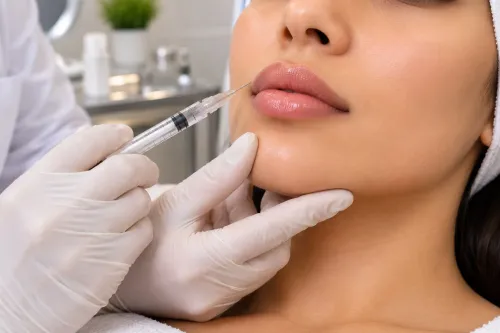
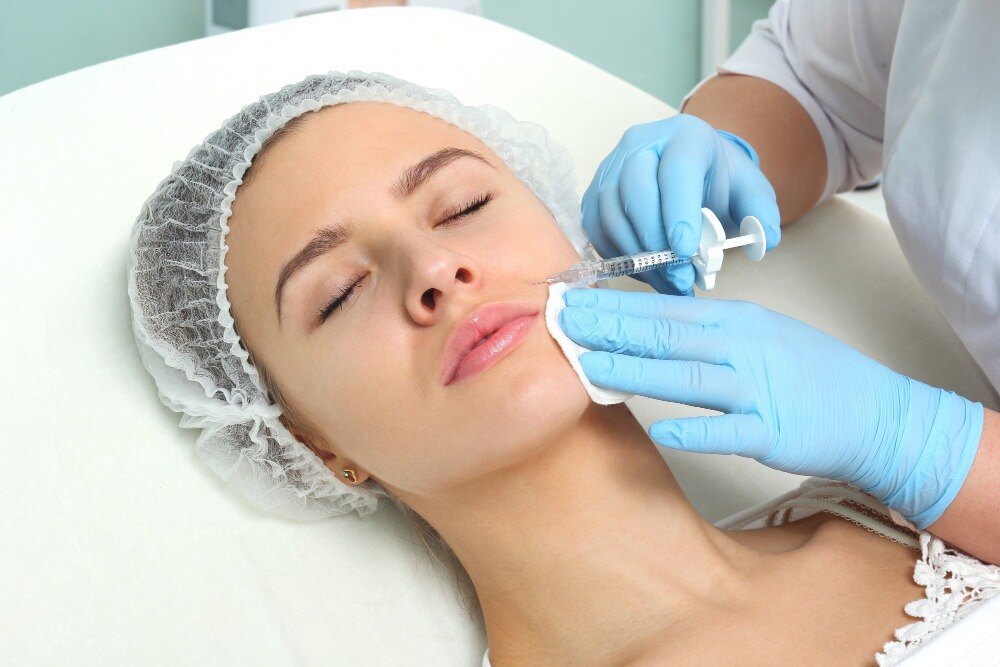
A filler appointment follows a planned sequence, not a single injection. Expect:
- Medical history, allergies, medicines, previous filler, pregnancy or breastfeeding status, and goals are reviewed before written consent.
- The injector identifies the product by name, indication, lot or batch number, and expiry date.
- Facial photography or a clinical assessment records proportions, asymmetry, movement and the intended contour.
- Facial marking maps entry points, treatment boundaries and injection depth.
- The skin is cleansed, then topical anaesthesia or local anaesthesia is used when appropriate.
- A fine needle or blunt cannula is placed. A cannula does not remove vascular risk; anatomy, depth, low-pressure technique and careful product placement still matter.
- Filler is injected incrementally rather than deposited all at once.
- The injector shapes the area, checks symmetry and reviews the immediate result with you.
Redness, swelling, bruising, tenderness and itching are common short-term effects. Temporary unevenness often reflects swelling rather than a failed contour. Lips can swell noticeably because they move constantly; tear troughs can remain puffy longer because the under-eye tissues are delicate; larger cheek or jawline treatments involve more product and tissue, so recovery can take longer.
Plan to avoid makeup until the skin has closed, strenuous exercise and heat exposure for the period your injector specifies, and unnecessary touching or pressure. Leave time away from an important event and avoid air travel immediately after treatment if possible.
Your filler recovery timeline is not complete when swelling first falls: early swelling stops being a reliable measure of the final contour after the first few days, while assessment commonly takes about two weeks or longer.
How to choose a safe filler provider and recognize an urgent complication
Choose a licensed medical injector who can explain facial anatomy, injection depth, product selection and complication management—not a provider working at a party, salon or private residence.
Ask for the product name, lot or batch number, expiry date, approved indication, sterile technique, informed consent and a documented plan for vascular occlusion and infection, including hyaluronidase emergency treatment when a hyaluronic-acid filler is involved.
- Postpone treatment during pregnancy or breastfeeding because filler safety in these settings has not been established.
- Postpone injections over active acne, cold sores, dermatitis or another skin infection near the planned area.
- Do not treat a blunt cannula as a guarantee: vascular risk remains, so ask how the injector uses low pressure, incremental placement and anatomical landmarks.
- Expect temporary redness, swelling, bruising, tenderness, itching or unevenness; report symptoms that worsen instead of settling.
- Ask how the clinic manages lumps, nodules, migration, discoloration, infection, inflammatory reactions and persistent asymmetry, including problems appearing weeks, months or years later.
| Sign | Why it matters | What to do |
|---|---|---|
| Severe or escalating pain | Possible vascular compromise or tissue injury | Seek immediate medical assessment |
| Pale, gray or mottled skin | Possible vascular occlusion | Contact the injector and obtain emergency assessment immediately |
| Any visual disturbance | Possible eye or retinal involvement | Treat as an emergency; do not wait for review |
Dr Skin N You can be assessed by the same questions: who injects, what product is used, how consent is recorded and whether emergency escalation is prepared. No clinic or technique makes filler risk-free.
Related service
Fillers Fillers Dermal Fillers are advanced, non-surgical aesthetic treatments offered by Dr. |
Frequently asked questions
Which facial changes can dermal fillers improve?
Dermal fillers can address hollows, reduced projection and shallow folds caused by volume loss. They cannot lift substantial tissue descent like surgery.
How do filler materials and treatment sites change the result?
Different filler materials have different properties, including firmness, flexibility and water attraction. The injector selects the product and injection depth according to the area and desired contour.
What happens during dermal filler treatment, and how long is recovery?
Treatment involves assessment, skin cleansing, injections and monitoring. Swelling, tenderness or bruising can follow, so ask the provider when normal activities and exercise are safe.
How can you choose a safe dermal filler provider?
Choose a medically qualified injector who explains the product, records its batch and expiry details, discusses risks and has a plan for managing complications.
Which symptoms after filler require urgent medical attention?
Seek urgent care for severe or worsening pain, pale or mottled skin, marked asymmetry, or any sudden change in vision after treatment.