

Excess surface oil, visible follicular openings and rough texture often return because the underlying causes remain active after cleansing. By the end, you will know how carbon peeling works, which changes are temporary, when another treatment is a better fit, and how to assess safety before booking.
Key takeaways
- Wear eye protection rated for the laser’s 1,064-nm wavelength.
- Ask the clinician to assess active acne, irritation, pigmentation and medication history first.
- Expect smoother-looking skin and reduced surface oil, not permanently smaller pores.
- Compare carbon peeling with peels, microneedling and laser treatments for your main concern.
What Happens During a Carbon Peeling Session?
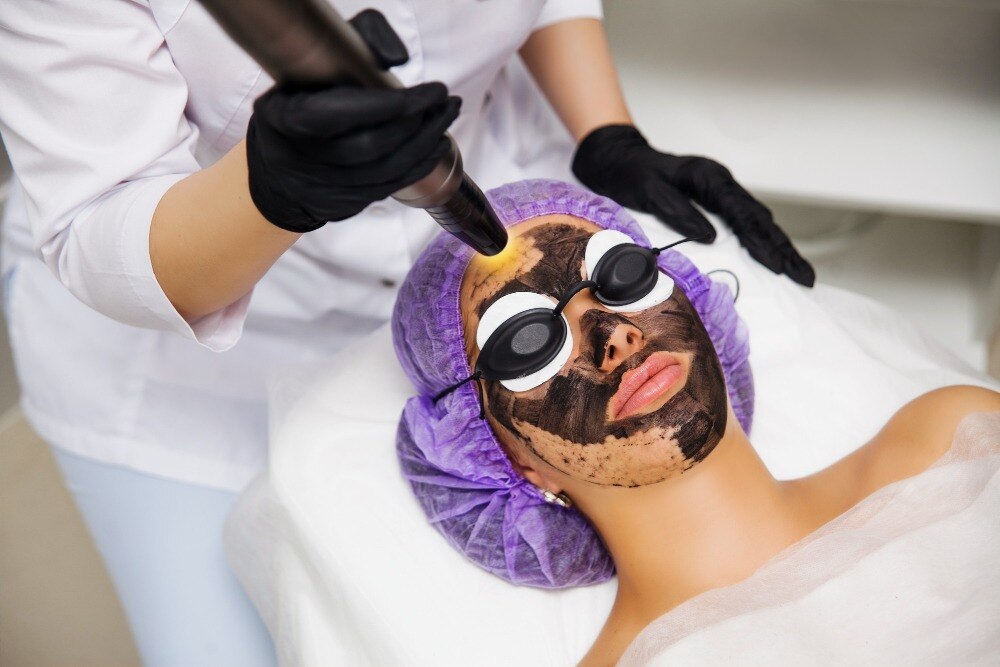
The session begins with cleansing to remove makeup, sunscreen, oil and surface debris. The clinician then spreads a thin carbon lotion, also called a carbon mask, over the treatment area and lets it dry completely. You and the treatment staff must wear eye protection rated for the laser’s 1,064-nm wavelength.
- The clinician makes controlled passes with a Q-switched Nd:YAG laser. Short pulses are absorbed by the dried carbon, causing it to fragment or vaporise along with some attached oil, scale and debris.
- Additional passes may target follicular openings and areas of uneven texture. You may hear snapping sounds and feel warmth or brief pinpricks.
- The remaining carbon residue is wiped away or washed off, and the skin is checked for excessive redness or irritation.
- A bland moisturiser or soothing product is applied, followed by broad-spectrum sunscreen. Avoid scrubs, picking, heat and irritating actives until the skin settles.
| Treatment | Laser and action | What it means |
|---|---|---|
| Carbon peeling | Q-switched Nd:YAG, 1,064 nm; carbon absorbs the pulses | Superficial exfoliation and temporary removal of oil and debris |
| Carbon-dioxide resurfacing | Ablative CO2 laser removes controlled layers of skin | A different, more intensive resurfacing procedure with greater downtime |
The immediate “cleaner” appearance does not mean pores have permanently shrunk or sebum production has stopped.
How Carbon Peeling Changes Oil, Pores and Texture
A carbon mask can make oily skin look cleaner within one session by lifting surface sebum, scale and follicular debris as laser passes fragment and vaporize the carbon. A Q-switched or similar short-pulse 1,064-nm Nd:YAG laser also delivers heat around pilosebaceous follicles, which may temporarily reduce oil output.
It does not permanently reset sebaceous activity, and evidence for the duration and size of this effect comes from small, short studies.
Enlarged pores are openings of pilosebaceous follicles, so carbon cannot close them permanently. Carbon sitting on the surface and inside follicular openings absorbs laser energy; its thermal or explosive removal takes away some oil and debris. With less material present, openings reflect less shine and look less prominent, while nearby surface roughness appears smoother.
As sebum and follicular debris return, pore appearance can return too.
Realistic texture change means a smoother feel, less surface scale and a more even finish—not removal of deep acne scars, pits or pronounced lines. It will not remodel skin like fractional resurfacing.
If the underlying oily or acne-prone tendency continues, carbon peeling does not replace a long-term regimen such as a topical retinoid or salicylic acid when appropriate.
Who Is a Good Candidate, and What Must Be Checked First?
The best candidates have oily skin, visible follicular congestion, enlarged-pore appearance or mild uneven texture without active irritation. Carbon peeling can make pores look cleaner and skin feel smoother, but it does not permanently shrink pore openings or replace treatment that controls sebum and acne formation.
| Concern | Suitability | What to check |
|---|---|---|
| Oily skin and surface congestion | Often suitable | Confirm that excess oil, scale and debris—not severe inflammation—drive the concern. |
| Mild inflammatory acne | Consider only after assessment | Check lesion number, skin sensitivity and whether acne treatment already controls the inflammation. |
| Cystic acne | Usually not the right choice | Deep, painful nodules need acne-directed medical treatment rather than superficial cleansing. |
| Rosacea or eczema | Delay during active disease | Redness, burning, scaling, cracks or flares increase irritation and pigment-change risk. |
Your clinician should review previous laser reactions, post-inflammatory hyperpigmentation, keloid scars, cold sores, recent tanning, sun exposure, wounds and recent waxing, exfoliation or chemical peels. Darker phototypes need conservative settings and a test spot because laser-related inflammation can leave dark marks.
Disclose every medicine and product, including isotretinoin, topical retinoids, salicylic acid, benzoyl peroxide, antibiotics, steroid creams and photosensitising drugs. Treatment may need to wait until irritation settles or a prescribing clinician confirms it is safe. Carbon peeling also does not replace long-term oily-skin care such as retinoids or salicylic acid.
What Results Can You Expect, and How Long Do They Last?
Immediately afterward, expect a smoother feel, a temporary glow and reduced surface oil rather than a permanent change in pore size. Mild redness, warmth, tightness or swelling can last for several hours; dryness, fine scaling or pinpoint crusting may follow. Makeup can make the result look better before the skin has fully settled.
The cleansing and superficial exfoliation effect is visible at once, but skin texture improvement is easier to judge after a few days, once redness and surface dryness have resolved. Pores may look less prominent because oil and follicular debris have been reduced, not because the pore openings have been closed.
The effect should remain subtle; deep acne scars and pronounced laxity need different treatment approaches.
Results do not have a fixed duration. Surface oil, follicular debris and normal texture return as the skin’s biology resumes, so the smoother appearance can fade. A clinician may suggest a course of treatments followed by maintenance sessions, but the interval should reflect your response, the laser settings and any irritation—not a universal calendar.
More treatment is not automatically better: persistent redness, blistering, crusting or darkening needs medical review before another session.
Which Treatment Fits Your Specific Concern?
For oily skin with visible follicular debris and mild roughness, carbon peeling sits between routine cleansing and resurfacing. It can make pores look cleaner and texture smoother without permanently shrinking pore openings. Choose the option that matches the cause, not just the quickest glow.
| Option | Oil and pores | Texture and best fit |
|---|---|---|
| Routine cleansing | Removes surface oil; does not control excess sebum or deep follicular plugging | Daily baseline, not a procedure |
| Carbon peeling | Temporarily lifts oil, scale and debris; pore appearance can return as sebum resumes | Mild unevenness with little downtime |
| Medicated chemical peels | Salicylic acid can enter oily follicles; other prescribed acids target acne, pigmentation or congestion | Better when inflammation or persistent plugging needs treatment |
| Microdermabrasion | Exfoliates surface buildup but does not directly regulate sebum | Fine roughness and dull surface; avoid treating active inflamed acne without advice |
| Dermaplaning | Removes surface cells and vellus hair, not excess oil inside follicles | Surface smoothness and makeup application, not pore control |
| Fractional laser resurfacing | Limited direct oil control | Stronger collagen remodeling for scars and deeper texture, with more downtime and pigment risk |
At Dr Skin N You, ask the clinician to separate active acne or seborrhoea from a cosmetic pore concern before selecting a procedure. Prescription retinoids, salicylic acid or other treatment may address the ongoing problem more effectively than repeated exfoliation alone.
Related service
Carbon Peeling also known as the Carbon Laser Peel, is an advanced, non-invasive skin rejuvenation treatment offered by Dr. View service → |
How to Prepare, Reduce Risk and Judge a Clinic
Tell the clinician your Fitzpatrick phototype, history of post-inflammatory hyperpigmentation, active rash or infection, recent tanning, and all photosensitising medicines. Avoid tanning and irritating exfoliants before treatment; arrive with clean skin and follow instructions about retinoids or acids.
Afterward, use gentle cleanser, moisturiser and broad-spectrum SPF 30, and avoid picking, heat and vigorous exercise until redness settles.
- Expected: warmth, stinging, redness, mild swelling, dryness or light scaling.
- Seek medical review for blistering, significant burns, increasing pain, pus, fever, prolonged redness, or darkening that suggests post-inflammatory hyperpigmentation.
- Ask whether a conservative test spot will be used, especially for darker phototypes, and request the planned fluence, spot size, pulse duration and number of passes.
Check these clinic safeguards before consenting:
| Item | What to verify | Why it matters |
|---|---|---|
| Laser | Device name and wavelength, such as Q-switched 1,064-nm Nd:YAG | Settings vary between machines |
| Eye safety | Wavelength-matched goggles for you and staff | Direct or reflected 1,064-nm energy can injure eyes |
| Consent | Written risks, alternatives, aftercare and emergency contact | You can make an informed choice |
| Records | Test-spot result and treatment settings documented | Supports safer repeat sessions |
Frequently asked questions
What happens during a carbon peeling session?
The clinician cleanses the skin, applies a thin carbon lotion, waits for it to dry, and uses eye protection during the laser treatment.
Who is a good candidate for carbon peeling?
Suitability depends on your skin condition, active irritation or acne, pigmentation risk, medications and the clinician’s examination before treatment.
What results can you expect from carbon peeling?
Carbon peeling can improve the appearance of surface oil, pores and uneven texture, but it does not permanently shrink pores or replace a treatment plan for the underlying cause.
How should you prepare for carbon peeling?
Tell the clinic about your skincare products, medicines, recent procedures and skin reactions, then follow its instructions about sun exposure and irritating products.
Which treatment fits oily skin, enlarged pores or uneven texture?
The best choice depends on whether oil, congestion, scarring, pigmentation or texture is your main concern; compare carbon peeling with chemical peels, microneedling and other laser treatments.