

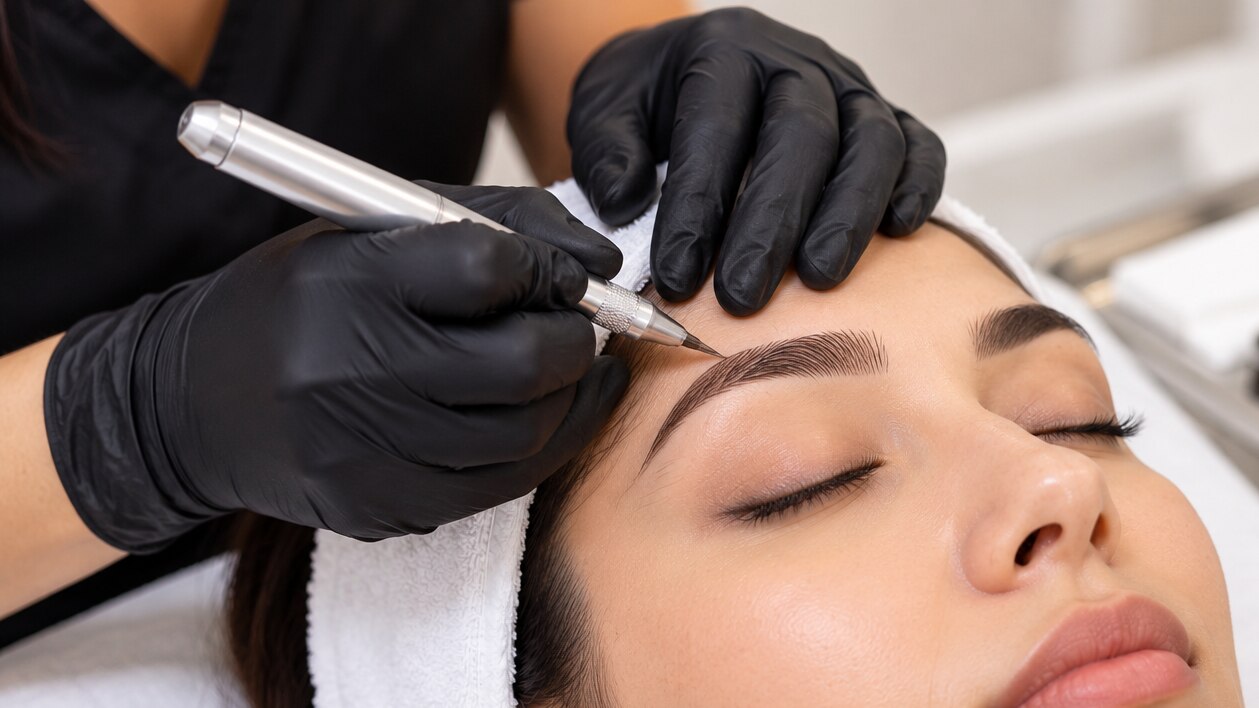
Thin brows often look uneven because small gaps, over-plucked areas, fading tails and different arch heights interrupt the natural hair pattern. By understanding how pigment strokes create visual coverage, how the result heals, and where the method has limits, you can judge whether microblading is likely to improve your brows or whether another approach fits better.
Key takeaways
- Choose hair-stroke placement that follows your existing brow growth.
- Microblading can camouflage small gaps, uneven tails and mild asymmetry.
- Compare temporary makeup with powder brows and machine-stroke techniques.
- Check healing expectations, skin type and practitioner experience before treatment.
How Hair-Stroke Placement Makes Sparse Brows Look Fuller
A handheld blade places narrow pigment strokes into the superficial skin layers, creating marks that resemble individual brow hairs rather than a solid block of colour. The strokes follow the direction and spacing of nearby growth, so skin remains visible between them.
This makes a thin brow look denser without the painted-on finish of a pencil or powder.
Hair-stroke placement works best when each gap receives a deliberate stroke instead of a repeated pattern across the entire brow. It can:
- fill small over-plucked gaps without covering surviving hairs;
- balance a slightly higher arch or shorter side;
- define a fading or incomplete tail.
The design follows your existing brow direction and facial movement, improving visual balance without forcing both brows into identical outlines. It cannot make major brow-muscle asymmetry disappear.
Microblading does not restore biological brow density. Pigment in the superficial skin layers provides camouflage, and retention changes as the skin heals; a follow-up around 4–8 weeks often replaces strokes lost during healing. Excess oil or scarred skin can blur fine lines, making shaded or combination work more legible.
Which Brow Gaps and Asymmetries Microblading Can Camouflage
Microblading can camouflage sparse growth, over-plucked areas, uneven arches, missing tails and small differences between the two brows. It adds visual strokes where hair is thin or absent, but it does not create follicles or restore true density.
| Pattern | What microblading can camouflage | Main limitation |
|---|---|---|
| Sparse growth | Small gaps between existing hairs | It cannot increase natural hair growth |
| Over-plucked areas | Stable thinning along the upper or lower brow | Repeated plucking can keep causing new gaps |
| Uneven arches | A modest height or shape difference | It cannot overcome major brow-muscle asymmetry |
| Missing tails | A fading or incomplete outer brow | The design must suit your natural hair direction |
| Minor brow mismatch | Slight differences in length, outline or fullness | The two brows will not become anatomically identical |
Have new or worsening eyebrow loss assessed before cosmetic treatment. Rapidly progressive, patchy or one-sided loss can indicate alopecia areata, thyroid disease, dermatitis, scarring alopecia or a nutritional problem rather than simple thinning.
Stable loss after years of plucking is a better situation for camouflage. Wait for evaluation if the brow skin has an active rash, infection or substantial scar, because pigment placement can irritate diseased skin and cannot recreate a suitable surface.
A clinician should also investigate sudden shedding, broken hairs, scaling, pain or redness before any cosmetic procedure.
Microblading Compared With Pencils, Tints, Powder Brows and Machine Strokes
Microblading sits between daily makeup and longer-lasting cosmetic tattooing. It creates fine, hair-like marks in the superficial skin, while the alternatives either coat the hairs, stain the skin, or deposit broader pigment.
| Option | Appearance | Duration and maintenance | Skin suitability |
|---|---|---|---|
| Microblading | Individual-looking strokes with a natural, unfilled effect | About 1–3 years; healing review and frequent touch-up around 4–8 weeks | Best on normal to dry, relatively smooth skin; oily skin, enlarged pores, dermatitis and scars can blur strokes |
| Brow pencils and tinted gels | Adjustable colour and definition; easiest to make lighter or fuller | Wears off with cleansing or sweating; apply daily | Suitable for every skin type, including skin unsuitable for tattooing |
| Brow tinting and henna brows | Darken existing hairs; henna also stains the skin temporarily, but neither creates hair strokes | Fades faster than cosmetic tattooing; repeat appointments are needed | Useful when hairs are present; patch-test products and avoid irritated skin |
| Powder brows | Soft, shaded makeup effect rather than separate hairs | Longer-lasting than makeup; fades gradually and needs maintenance | More legible than microblading on oily or textured skin |
| Machine strokes | Hair-like marks made with a cosmetic tattoo machine; results depend heavily on technique | Semi-permanent; fading and touch-ups vary by skin and pigment | Can suit some oily skin better than manual strokes, but scarred or previously tattooed skin remains less predictable |
Microblading looks darkest and sharpest immediately after treatment, then softens as it heals. It cannot match pencil-level reversibility, and it does not improve brow growth; it only camouflages gaps.
Why Skin Type and Healing Change the Final Brow Result
The brows look darker, sharper and sometimes redder immediately after treatment than they will after healing. Swelling and surface pigment exaggerate the early result; as the skin settles, strokes usually soften and lighten, so judge colour and definition after healing, not on the appointment day.
| Factor | Effect during healing | Likely result |
|---|---|---|
| Oily skin | Oil can spread pigment at the surface and make delicate cuts heal less distinctly | Hair strokes may look softer, wider or less defined |
| Enlarged pores | Uneven skin texture prevents pigment from sitting in uniformly narrow lines | Crispness and retention can vary across the brow |
| Frequent sweating | Moisture and friction can disturb the healing surface, especially with rubbing or tight headwear | More pigment loss and patchy strokes |
| Sun exposure | Ultraviolet light accelerates pigment breakdown after healing | Faster fading and less stable colour |
| Skincare products | Retinoids, exfoliating acids and scrubs can irritate healing skin or speed later fading | Uneven retention if used too soon or repeatedly |
A follow-up at about 4–8 weeks allows the skin to finish healing before missing pigment, colour or shape is assessed. A touch-up does not automatically mean the first session failed; superficial pigment retention differs between people.
For oily skin, enlarged pores or a history of poor retention, powder or combination brows can remain more legible than extremely fine strokes. Follow the treating clinician’s aftercare instructions, particularly about washing, sweating, sun protection and when to restart active products.
What to Check Before Choosing Microblading for Uneven Brows
A clean brow area is not enough; confirm who is performing the procedure, what enters your skin, and how complications will be handled. Ask to see the practitioner’s training, infection-control process, single-use blade packaging, pigment ingredient list, pigment batch number, expiry date and sterility information.
Request allergy information and ask how the clinic records your pigment for future correction or removal.
| Check | What to confirm | Why it matters |
|---|---|---|
| Practitioner | Experience with uneven brows and healed-result photographs | Poor stroke placement can exaggerate asymmetry |
| Pigment | Brand, ingredients, batch number and expiry date | Formulations differ and removal can be difficult |
| Equipment | Sealed, single-use blades and disinfected surfaces | Reuse or weak cleaning increases infection risk |
| Aftercare | Written instructions on washing, sun, picking and active skincare | Crust removal and premature exfoliation can cause fading or patchy healing |
| Correction plan | Who treats unexpected colour, infection or scarring | Correction is harder than initial placement |
Postpone treatment over an active skin disease, infection, open wound or inflammatory rash at the brow. Discuss substantial scarring, a strong keloid history, uncontrolled diabetes or another condition that impairs wound healing before booking. Do not stop aspirin, anticoagulants or antiplatelet medicines without the prescribing clinician’s advice; bleeding can reduce pigment retention.
Dr Skin N You can help you assess whether the skin is suitable before treatment rather than treating through a rash or scar. Tell the practitioner about previous permanent makeup and disclose it before an MRI. Follow the clinic’s written aftercare instructions, especially regarding sun exposure and skincare acids or retinoids.
Related service
Eyebrow Microblading Eyebrow Microblading is a semi-permanent cosmetic procedure offered by Dr. View service → |
Frequently asked questions
How does hair-stroke placement make sparse brows look fuller?
Fine pigment strokes follow nearby hair direction and leave skin visible between marks, creating a fuller, hair-like appearance.
Which brow gaps and asymmetries can microblading camouflage?
It can camouflage small gaps, sparse sections, uneven tails and mild differences in brow shape when the desired design suits your natural growth.
How does microblading compare with pencils, tints, powder brows and machine strokes?
Pencils wash off, tints colour existing hairs, powder brows create a shaded effect, and machine strokes use a powered device for implanted pigment. Each option differs in finish, longevity and suitability.
Why do skin type and healing affect the final microblading result?
Oil production, skin texture, sun exposure and aftercare affect pigment retention, stroke sharpness and the healed colour.
What should you check before choosing microblading for uneven brows?
Review healed results, confirm the practitioner’s training and hygiene practices, discuss your skin type and medical history, and ask about aftercare and touch-ups.